
How do porta potties work on a job site?
A standard unit is a self-contained box, about 44 by 48 inches on the ground and 92 inches tall, sitting over a holding tank. There is no plumbing hookup. The tank chemical, a blue liquid, breaks down waste and tissue and keeps the smell down between services. When a construction worker uses one, everything drops straight into that tank, and a vent stack pulls odor up and out above head height instead of back into the stall. OSHA 1926.51(c) sets the ratio for how many units a crew needs: one toilet for 20 workers or fewer, then one toilet seat and one urinal per 40 workers as the crew grows past that, dropping to one per 50 once you hit 200 or more. That is why a busy Edison job site with 35 framers looks different, unit-count-wise, from a 10-person punch list. Most contractors handle this with a standard porta potty rental delivered and serviced weekly, though a fast-moving job might need a porta potty rental per day arrangement instead. Placement matters too. Units go on level ground, away from doorways and drainage paths, following a porta potty placement guide that also covers required clearance for the pump truck.
How do flushable porta potties work?
A flushable, or deluxe, unit adds a small onboard freshwater tank and a hand pump or foot pump that pushes a rinse of water through the bowl after use, flushing waste into a separate holding tank below. It still is not connected to a sewer line; it just separates fresh water from waste water inside one unit, which cuts smell noticeably compared to a standard chemical-only toilet. These show up most at weddings and upscale events where guests expect something closer to a real bathroom. A deluxe flushable porta potty usually includes a small sink built into the same unit, or gets paired with a separate handwashing station. For anyone comparing options for a backyard wedding or a corporate event in Edison, the wedding restroom rental and event restroom rental pages break down what tends to fit which guest count. ADA-compliant units follow a different structural spec entirely: ADA Standards section 304.3.1 calls for a 60 inch turning circle inside, and section 404.2.3 sets minimum door opening width at 32 inches, both built into every ADA accessible porta potty Edison Porta Pros delivers.
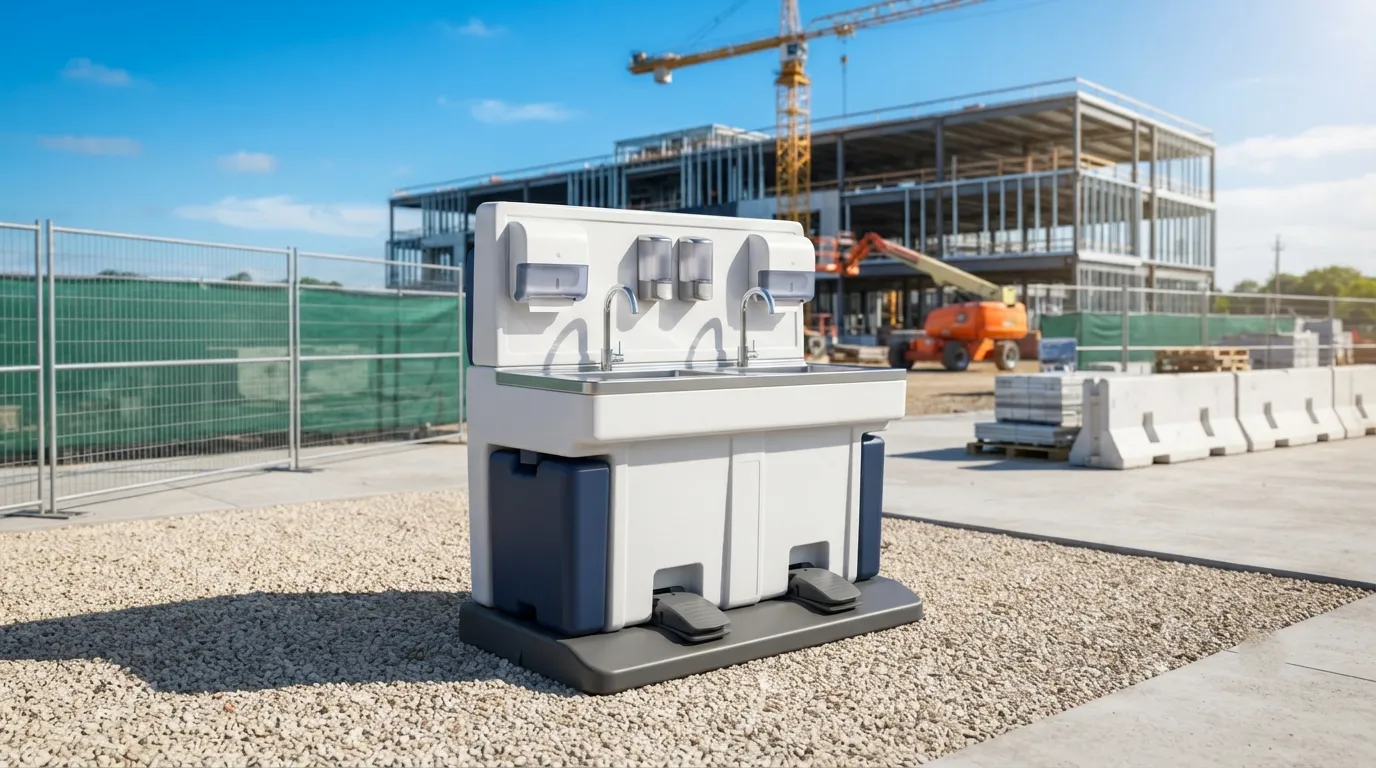
How does a portable sink work?
A portable sink runs on the same self-contained logic as a porta potty: a freshwater tank up top, gravity or a foot pump to move water to the faucet, and a separate greywater tank underneath to catch what drains out. Nothing hooks into a building's water line. Under 29 CFR 1910.141(d)(2), a proper handwashing setup needs soap and a towel or air dryer, not just sanitizer, and that rule shapes how these units get built and stocked. This distinction matters most on food-adjacent sites, restoration jobs, or anywhere OSHA 1926.51(f)(1) applies, which covers washing facilities required after work with paints, coatings, herbicides or insecticides. Crews doing that kind of work in Edison typically pair units from the handwashing station rental page with their toilet order rather than relying on hand sanitizer alone. A portable sink rental works the same way but stands alone, often placed near a food truck or a hand-labor crew. Farm operations fall under a related but separate rule, OSHA 1928.110, which requires field sanitation within a quarter mile walk for hand-labor employees, one facility per 20 workers, a detail covered further on the farm and agricultural restrooms page.
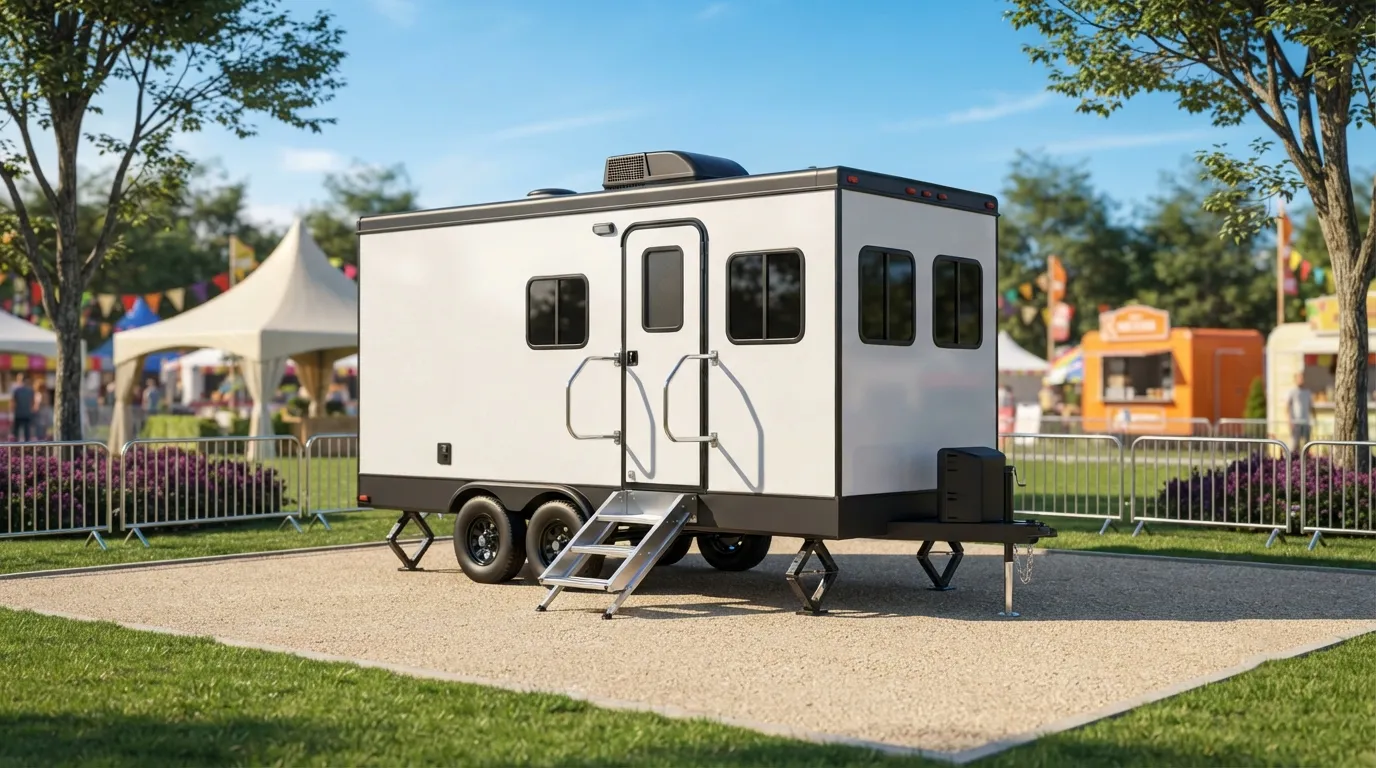
How do camping porta potties work, and what keeps them from smelling?
Camping and event units work the same as job-site units, chemical tank underneath, sealed lid, vented stack, but they usually see lighter, more irregular use, so service intervals matter more than unit type. ANSI/PSAI Z4.3 sets the baseline service interval at once a week for up to 10 users across a 40-hour week, though heavy weekend use at a festival or fair pushes that schedule tighter. That standard is why service trucks show up on a fixed route rather than randomly, and it is also why a how often are porta potties cleaned question usually comes down to expected user count, not unit age. For anyone worried about smell specifically, the short answer lives on do porta potties smell, but the chemical dose and pump frequency are the two levers that actually control it. Winter camping or late-season events in Edison add another wrinkle covered on porta potty in winter, since cold slows the chemical breakdown. Multi-day festivals, county fairs, and marathons routing through town all lean on the same base mechanics described on festival restroom rental, county fair restrooms, and marathon and race restrooms.
Do porta potties need to be connected to septic or sewer?
No. They are fully self-contained, which is the entire point. Waste sits in the sealed tank until a truck pumps it out, similar in principle to how a septic tank cleaning service pumps a fixed tank, except a porta potty tank is far smaller and gets serviced far more often.
What chemical goes in a porta potty tank?
A blue deodorizing chemical, added at each service, breaks down solids and tissue and controls odor between pump-outs. It is different from septic tank cleaning chemicals used in home systems, which target bacteria balance in a much larger buried tank rather than a portable holding tank.
How far does a service truck need to access the unit?
Placement depends on the site, but trucks need real clearance to park and run a hose safely. The porta potty placement guide covers ground stability and access distance for Edison deliveries specifically.
Can a construction worker use a regular unit if the crew is under 20 people?
Yes. OSHA 1926.51(c) allows one toilet facility for crews of 20 or fewer, so a single standard porta potty rental unit generally covers a small Edison crew without needing extras.
Do flushable units need more service visits than standard ones?
Not necessarily, but they do use fresh water that needs refilling alongside the waste pump-out. Ask about combined service scheduling when booking a deluxe flushable porta potty for an event or job site.
Next step
Get a delivery date
Tell us the address, the dates and the headcount. We size the order and confirm the route.